Spring Card: A Fresh Take on Full-Color Florals
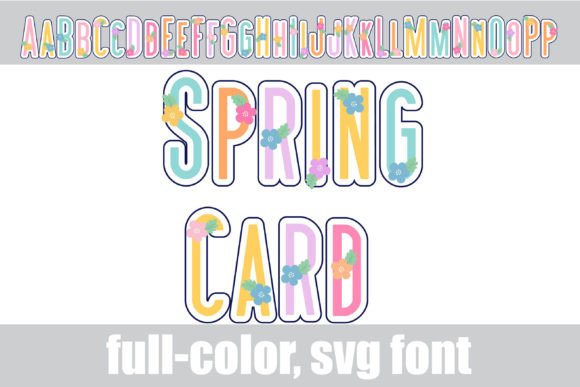
When a design calls for a dash of personality without sacrificing clarity, the Spring Card font steps in. It’s not just another decorative typeface; it’s a sophisticated blend of a clean, outlined sans serif font structure adorned with intricate, full-color floral motifs. This unique combination creates a premium font asset that feels both modern and whimsically artistic. As an OpenType full-color (SVG) font, it renders the vibrant botanical illustrations directly within the letterforms, offering a level of detail and color that traditional single-color fonts simply cannot match.
The visual character of Spring Card is defined by its duality. The base lettering is a sturdy, geometric outline, ensuring each character remains recognizable and structurally sound. Draped over and woven through these outlines are the florals—soft petals, budding leaves, and delicate stems rendered in a curated palette. This isn’t a script font or a handwritten font; it maintains the legibility of a sans serif font while delivering the organic, handcrafted feel of illustration. The included alternate case, accessible through your system's character map or software like Silhouette Studio, provides additional color variations, giving you creative control to customize the palette for your specific project.
Where This Creative Font Truly Blooms
Understanding where to deploy a specialized tool like Spring Card is key to leveraging its full potential. Its strength lies in applications where visual impact and a touch of elegance are paramount, rather than in long-form body copy. Think of it as the headline act, not the supporting text.
For brand identity and logo design, Spring Card can instantly convey a brand’s personality. Imagine a boutique florist, a wedding stationery studio, a high-end skincare line, or an artisanal tea company using this font for their wordmark. It communicates creativity, care, and a connection to nature. In packaging design, it can make a product label pop off the shelf, especially for items in the beauty, food, or lifestyle sectors. The full-color detail means the design does the talking, reducing the need for additional graphic elements.
Digital applications are where its SVG nature shines. Social media graphics created with Spring Card stop the scroll. A promotional post for a spring sale, an Instagram story for a new blog post, or a Pinterest pin for a DIY project gains immediate visual interest. For web design, it can be used heroically in large headlines or for special announcement banners, adding a layer of richness to the digital experience. In editorial design, it’s perfect for magazine pull quotes, chapter headings in a lifestyle publication, or the title of a seasonal feature. Crafters and hobbyists will find it invaluable for creating stunning greeting cards, invitations, and custom decals, where its personality can be fully appreciated.
Practical Guidance for Using a Full-Color SVG Font
Adopting a full-color SVG font like Spring Card requires a slightly different approach than using standard typefaces. First, confirm your software supports SVG color fonts. Programs like Adobe Photoshop, Illustrator, InDesign, Silhouette Studio, QuarkXPress, and Inkscape will render the colors correctly. In non-compatible programs, the font will appear as a solid black outline—still usable, but missing its defining feature. A pro tip: even in compatible software, the font preview in your dropdown menu might show as black; you’ll only see the color once you’ve typed and rendered it on your canvas.
When choosing Spring Card for a project, consider its role. It’s a display font, ideal for short bursts of text where personality is more important than dense readability. Test it at the size you intend to use it. Its intricate details need space to breathe and be appreciated. For font pairing, contrast is your friend. Pair Spring Card with a simple, neutral serif font or a clean sans serif for body text. This creates a clear visual hierarchy, allowing the floral font to command attention without overwhelming the entire layout. For example, pairing it with a timeless serif like Garamond or a modern sans serif like Montserrat creates a balanced and professional composition.
Review the alternate characters included. Accessing the alt case through your system’s font manager or glyph map in programs like Silhouette Studio can unlock different color schemes or floral arrangements, offering fresh variations for recurring projects. Finally, always check the licensing. As a commercial font, ensure the license covers your intended use, whether for personal client work, products for sale, or digital assets. This step is crucial for any design assets you incorporate into professional work.
Ultimately, Spring Card is more than just a creative font; it’s a design solution for projects that demand a memorable, artistic touch. By understanding its characteristics, best-use scenarios, and technical requirements, you can integrate it seamlessly into your toolkit to elevate your modern typography and create designs that resonate with warmth and sophistication.