Fifties Irish: More Than a Green Font for Vintage Design
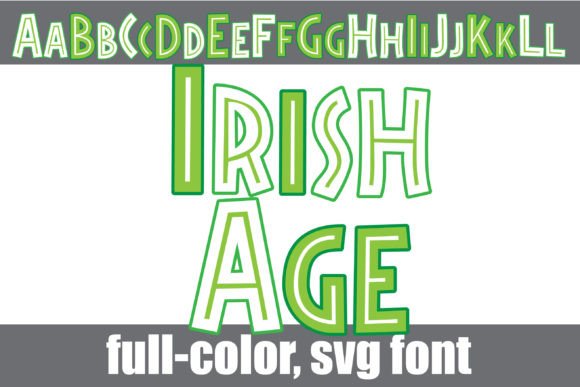
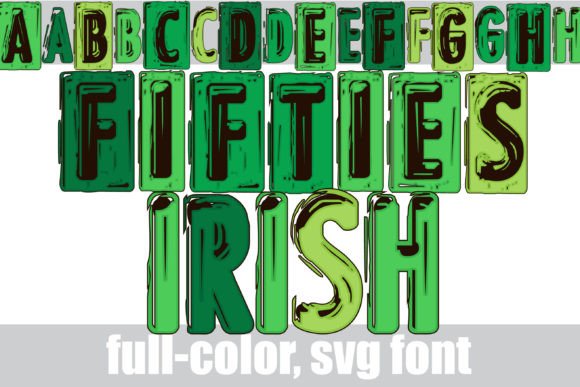
Capturing a specific moment in design history is tricky, but Fifties Irish nails it with a distinct personality that feels both nostalgic and refreshing. If you are looking for a premium font that breaks away from the standard sans serif font or serif font choices, this typeface offers something genuinely unique. It is a display font modeled after the embossed license plates of the 1950s, featuring a green color palette that immediately evokes a sense of place and time. However, calling it just a "green font" does it a disservice. It is a technical marvel as a full-color SVG font, meaning the color is baked directly into the vector file.
The visual characteristics of this typeface go beyond simple color. It mimics the slight imperfections and depth of stamped metal lettering. Unlike a standard script font or handwritten font, Fifties Irish relies on structure and weight to convey its message. The green hues are not flat; they simulate the texture of ink on a license plate. This makes it an excellent choice for projects that need to feel tangible and historical without looking like a generic "retro" filter. For designers, marketers, and content creators, this font serves as a powerful design asset that can instantly set a mood.
Where This Creative Font Shines in Real Projects
Because of its strong visual weight, Fifties Irish is best used where it can breathe. It is not a font for body text or long paragraphs. Instead, think of it as a headline driver. In logo design, particularly for brands dealing in heritage goods, pubs, mechanic shops, or vintage clothing, this typeface provides instant brand identity. It tells the customer exactly what vibe to expect before they even read the accompanying text.
For packaging design, especially in the food and beverage industry, Fifties Irish adds a layer of authenticity. Imagine a coffee bag or a craft beer label using this font for the product name; it suggests a recipe rooted in tradition. Publishers and bloggers can also leverage this font for editorial design. It works beautifully for magazine covers, chapter headings, or featured image text where you want to grab attention quickly.
Digital applications are also viable. While you might not use it for web design body copy due to file size and readability constraints, it is perfect for hero sections, banners, or social media graphics. Platforms like Instagram and Pinterest favor bold, eye-catching visuals. A title set in Fifties Irish stops the scroll. Small business owners and entrepreneurs can use it for merchandise like t-shirts or mugs, where the decorative nature of the font adds commercial value to the product.
Technical Realities: Color Fonts and Software Compatibility
Working with a color font requires a slightly different workflow than standard typography. If you are used to standard modern typography tools, you might be surprised the first time you select Fifties Irish in your font menu. In many preview windows, even in software that supports color fonts, it will appear as a solid black silhouette. This is normal. The color data often only renders once the text is typed out onto the canvas.
You need to ensure your specific software supports full-color SVG technology. Currently, Adobe products (like Photoshop and Illustrator), Silhouette Studio, Quark, and Inkscape are reliable choices. If you type out the word and it remains black, your program likely does not support the SVG format. In that case, the font will function as a standard black typeface. However, to get the full green, textured effect, you must use compatible software.
Practical Guidance for Pairing and Usability
When integrating Fifties Irish into your brand identity or design project, readability is your primary concern. This is a display font, meaning it is designed for impact, not legibility at small sizes. The embossed texture that makes it look cool at 72pt will make it a muddy mess at 12pt. Always use it for headlines, logos, or pull quotes.
Choosing the right font pairing is critical to making the design work. Because Fifties Irish has such a loud personality, you need to pair it with something quiet and neutral. A clean sans serif font like Helvetica, Arial, or a modern geometric sans works best. This contrast allows the display font to stand out without overwhelming the viewer. Avoid pairing it with other decorative fonts, script fonts, or busy serif fonts, as this will create visual chaos.
Before purchasing or downloading, check the licensing. Since this is a commercial font, you need to verify if the license covers your specific usage—whether that is a single logo, a run of merchandise, or digital assets. Also, explore the "alt cases" mentioned in the font description. Many high-quality creative assets include alternate glyphs or color variations. These can be accessed through your system’s character map or, if you are a crafter, through the glyph map in Silhouette Studio. This feature allows you to mix and match colors within the same word, adding even more depth to your visual hierarchy.
Adding Personality to Your Toolkit
Ultimately, Fifties Irish is about personality. It is a creative font that solves a specific problem: how to look vintage and authentic without using a grainy, low-resolution image. Because it is vector-based, it scales perfectly, making it suitable for everything from a small favicon to a large printed banner. For hobbyists and crafters, it offers a professional finish to DIY projects that standard system fonts cannot match. By understanding its technical requirements and pairing it correctly, you can use this font to elevate your projects from generic to memorable.